Wrist-Wrapped Numbers: Grassroots Coaches on Wearables, Data and Keeping the Joy in Club Night
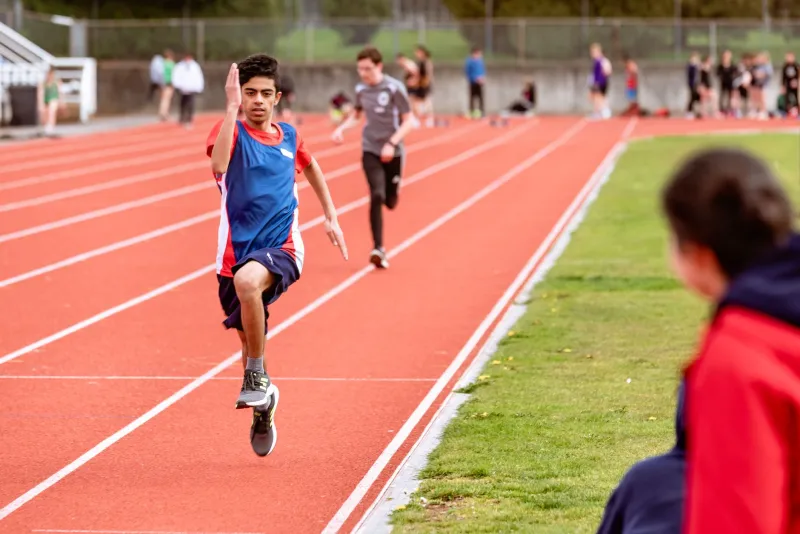
Photo: grassroots athletics coach with stopwatch and young athlete wearing GPS watch on outdoor track, via www.superformance.com.au
Indoor season is coming. You can tell because the club WhatsApp group has started filling with two things: entries for the 2026/27 sportshall leagues and screenshots of watch data. There is a screenshot of a 400m rep, a screenshot of a heart-rate graph, and a screenshot of a parent asking whether the training app is supposed to say 'unproductive' after a session that looked perfectly fine from the side of the track.
Welcome to the stopwatch versus smartwatch debate. At grassroots level, it is not really a debate about technology. It is a debate about attention. A stopwatch tells you a time. A smartwatch can tell you a time, a pace, a heart rate, a recovery score, a training load, a sleep pattern and — somehow — whether you are 'ready' for a session that your coach has already planned on a piece of A4 paper.
The case for the watch
Plenty of coaches are not anti-data. They are anti-noise. But they will happily use a watch when it answers a real question.
'For endurance kids, a GPS watch is brilliant,' says Maya, a sprint and endurance coach at a South London club. 'If we are doing a tempo run, I can see whether they held the pace or went off too hard. It saves me shouting across a field. But I do not need a readiness score to tell me a 14-year-old is tired. I can see it in their face.'
For athletes training mostly alone, the watch can be a useful training partner. It records sessions, keeps a log and gives a junior a sense of progress when the track is closed and the pavements are icy. Used well, it can encourage consistency — the least glamorous and most important habit in athletics.
The case against the spreadsheet
Then there is the other side. Coaches describe athletes arriving at club night worried about a number on their wrist. A warm-up is interrupted by a watch beep. A rep is judged not by the coach’s eye but by an app’s verdict. Parents compare training loads on the sideline like fantasy league points.
'We had a kid refuse to do a relay change because his watch said he was in the red,' says Dave, a throws and multi-event coach in West Yorkshire. 'He was 12. The watch did not know he was 12. It did not know he had PE that morning and a growth spurt last month. It just knew maths.'
That is the central problem. Consumer wearables are built for adults, often for endurance training, and they are not designed to coach a junior athlete through a club night. The numbers can be interesting. They are not the session.
What coaches actually do
Ask around UK clubs and a pattern emerges. Most coaches are pragmatic. They use watches for specific jobs and ignore them for others. The best club-night practice tends to look like this:
- Use a watch for pace, splits or route distance when it helps the athlete understand the session.
- Leave the watch on the sideline during technical work, drills, throws and jumps.
- Do not let a training app override a coach’s plan or a child’s common sense.
- Keep a simple log, but do not turn every rep into a presentation.
- Talk to the athlete about what the number means — or does not mean.
'My rule is simple,' Maya says. 'If the watch is helping the athlete listen to their body, great. If it is helping them ignore their body, it goes in the bag.'
A simple club-night data rule
For parents, the most useful question is not 'which watch should we buy?' It is 'what is this watch for?' A GPS watch can be a good buy for a teenager who runs cross-country and trains on their own. It is rarely necessary for a young sprinter or jumper whose main feedback is a coach, a runway and a landing pit.
For athletes, the rule is even simpler: the watch is a tool, not a coach. It does not know the plan for the next six weeks. It does not know that you are working on a longer penultimate stride. It does not know that the session is supposed to feel easy.
For coaches, the practical advice is to be explicit. Tell athletes when to wear it and when to take it off. Ask for one useful number, not a full data dump. And if a junior is anxious about a metric, deal with the anxiety before you deal with the graph.
The verdict? Keep it human
Wearables are not going away. They are getting cheaper, smarter and more wrapped into the culture of youth sport. That is fine. Grassroots athletics has always borrowed from the wider world — from better shoes to better timing systems to better warm-up ideas.
The risk is not the watch. The risk is letting the watch become the point. Club night is not a data-collection exercise. It is a place where a coach sees a junior athlete run badly, asks a question, changes a drill and watches something click. No app has worked out how to send that notification yet.
So use the watch. Use the app. Use the stopwatch, too. But keep the session human. The best data at any club night is still the coach saying, 'That one was better — do it again.'