Twenty Metres of Tarmac and a Big Idea: Inside the Club That Has No Track
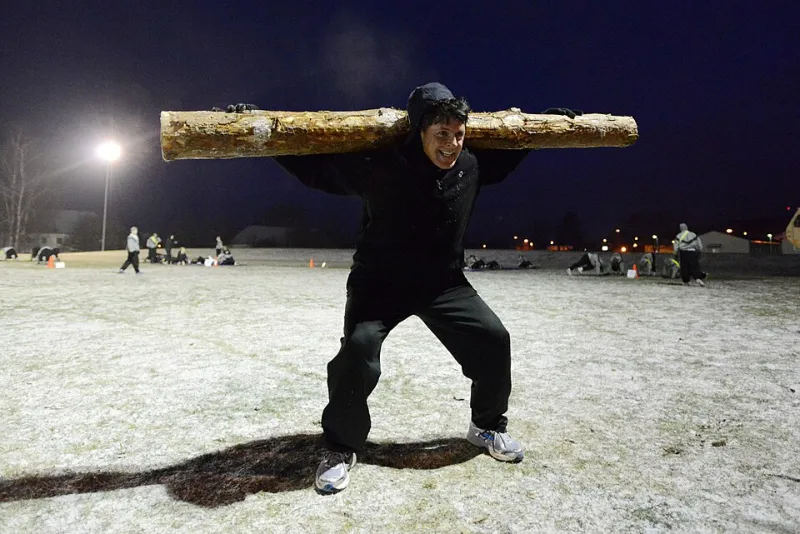
Photo: U.S. Army photo by Gertrud Zach/Released, Public domain, via Wikimedia Commons
It is 7.05pm on a Tuesday in October, and the car park behind Kingsmoor Leisure Centre is full. Not with cars — with people.
Two coaches are laying out cones along the back wall, where a 40-metre stretch of tarmac runs between the bins and the fire exit. A group of under-13s are doing skipping drills under a floodlight that technically belongs to the bowling club. A senior athlete is running laps of the perimeter, dodging a delivery van, and somebody has chalked a start line on the ground that will be gone by morning.
Kingsmoor Harriers have around 190 members, a waiting list for the junior section, three qualified coaches and no track. They have not had one since the synthetic surface at their local stadium was condemned, then closed, then fenced off. That was seven years ago.
The 26-mile problem
The nearest usable track is 26 miles away and hires out at £95 an hour. There are slots on Tuesday and Thursday evenings, shared with two other clubs, which in practice means three lanes and a busy inside lane on the bends.
The club runs a minibus once a week. It has fourteen seats and twenty-two people who want them, so there is a rota, and a spreadsheet, and the sort of quiet diplomacy that grassroots clubs are extremely good at.
Rather than shrink to fit the track, Kingsmoor made a decision: build a programme that doesn't need one.
What a session actually looks like
Tonight's plan is pinned to the hut wall. The sprint group is doing 20-metre accelerations off a chalk line, then flying 30s along the perimeter road where a marshal stands at the one junction with any traffic. The endurance group disappears onto a 4km loop around the industrial estate, past the units that shut at six, so the roads are empty and the street lighting does the job.
The throwers have the best of it, relatively speaking: a local secondary school lets them use a field on Sunday mornings, where a temporary cage goes up and comes down again inside two hours. The jumpers do plyometrics, bounding drills and a lot of landing mechanics on the school sports hall floor, because there is no pit to jump into.
Winter means the sports hall, hired for £34 an hour, where the under-11s do relay changeovers on the wooden floor and coaches improvise hurdles out of anything that will stand up.
The trade-offs, honestly
The club is refreshingly unsentimental about what it cannot do.
Sprinters rarely get past 60 metres, so speed endurance stalls and the athletes who want to progress over 200m and 400m start looking elsewhere. Tarmac is unforgiving: shin complaints rise in the autumn, shoes wear out faster, and nobody is pretending the surface is kind. There is no long jump pit, so horizontal jumpers spend years doing drills instead of jumps. Pole vault is simply not offered. Car parks flood, and twice this year a session was cancelled because of standing water.
Then there is competition. Kingsmoor cannot host a home fixture, so every league match is an away match, with the travel costs and the 7am minibus departures that come with it. The club estimates it spends more on transport in a season than on coaching courses.
And the hardest one: a handful of talented teenagers have drifted to clubs with tracks. Some have stayed in touch. Some have not.
Why they stayed anyway
Against all of that, the numbers are going up. Junior membership has grown every year since the stadium closed. Retention among the 9-to-13 age group is unusually high, in a sport where many clubs lose half their intake within two seasons.
The coaches put it down to three things: convenience, community and invention. A car park is five minutes from home and free. Nobody is driving 50 minutes each way on a school night. And the sessions, out of necessity, lean hard on strength, mobility, coordination and game-based work — which, whisper it, is not the worst foundation for a young athlete.
"We're not a club without a track," one of the Level 2 coaches tells me, deadpan. "We're a club with a car park that has got very good at pretending."
The wider picture
Kingsmoor is not an outlier so much as a preview.
Across the country in 2026, clubs are negotiating with councils, leisure trusts and academy chains for slices of time in spaces that were never designed for athletics. Hire fees have climbed. 3G pitches have multiplied, but most ban spikes, so they solve a football problem rather than an athletics one. School facilities are frequently locked after 6pm thanks to site security and insurance arrangements. Floodlit tarmac, meanwhile, is often the only free surface for miles.
The result is a patchwork. Clubs block-book track time in consortiums of three or four and share the risk. Others buy portable floodlights and paint their own lane markings on dead-end service roads with written permission from the landowner. Some have resurrected grass tracks on school fields, chalked and mown and wonderfully old-fashioned.
All of it is inventive. None of it is a substitute for a facility.
What would actually help
Ask a dozen club volunteers and you get a fairly consistent list, and almost none of it is glamorous.
A national, searchable register of bookable space — school fields, sports halls, closed roads, leisure centre surrounds — would save clubs hundreds of hours a year. Block-booking support, so a small club isn't negotiating alone against a leisure trust. Funding streams that cover the boring things: floodlights, storage containers, a cage, a key and a permission slip. And councils writing community clubs into school leases at the planning stage, rather than discovering the demand afterwards.
The last word
At 8.20pm the cones come in, the chalk start line is scuffed away by the last pair of trainers, and the car park goes back to being a car park.
The track has not reopened. It is not scheduled to. But the club has just secured a Monday night in a school sports hall for the whole winter, and a grant application for two portable floodlights is in, and the under-13 group is bigger than it has ever been.
Sometimes that is what progress looks like. Twenty metres of tarmac, a marshal at the junction, and a club that simply refused to stop.