The Great Leveller: Why Your Club Handicap Race Is the Best Night of the Winter
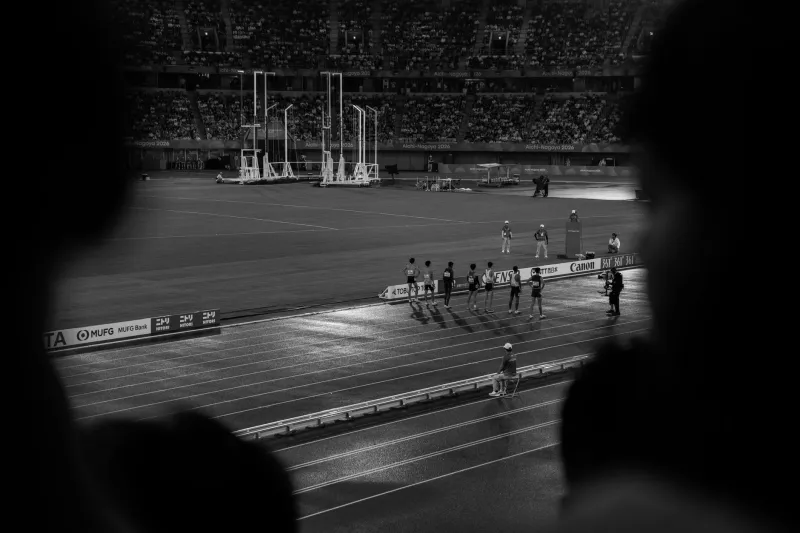
There is a particular sound to a club handicap night. It is not the sharp crack of spikes on a summer track or the roar that greets a championship finish. It is a clipboard being tapped in the cold, a marshal shouting numbers into the dark, and a first-season junior asking whether they really get a head start on the fast lads. The answer, gloriously, is yes.
On a damp Tuesday in November, with the floodlights on and the tea urn doing its thing indoors, the handicap race quietly gets on with being one of the most useful things a UK athletics club can put in its winter calendar. It is a race, but it is also a social experiment. It asks a simple question: what happens when you give everyone a fair crack at the same finish line?
The simple maths behind a fair fight
A handicap race works on predicted times. Runners submit a recent 5k, parkrun, track time trial or cross-country result, and the organiser works out how long each person is likely to take. The slowest runners set off first. The fastest runners set off last. In theory, if everyone runs exactly to their prediction, the whole field arrives at the finish together.
The arithmetic is not complicated, even if it can feel like it on a dark evening with a clipboard. Say the slowest runner is predicted at 32 minutes and the fastest at 18 minutes. The slowest starts first. The fastest waits 14 minutes before setting off. The chasing begins. On a track, a 3,000m handicap might use staggered starts around the oval; on a 5k route, it means a rolling start and a lot of watch-checking.
What makes it work is that the maths is never perfect. A junior improves by 40 seconds. A veteran has a good night. Someone goes off too hard because they were chatting at the start and forgot to warm up. The predicted times are a guide, not a prophecy. That is precisely why the race is so watchable. The favourite is not the fastest runner on paper; it is the person who has been given just enough rope to hold on.
More than a race: the social engine
The handicap is one of the few club events where a first-season under-13 and a grizzled vet can share the same competitive story. The junior gets a head start and the thrill of being chased. The fast lads get the challenge of picking their way through the field. The veteran plodder gets a race they can actually win, or at least a race where they are not simply watching the same three people disappear up the road.
That matters more than it sounds. League fixtures are brilliant, but they are selective. Teams are picked, travel is arranged, and plenty of club members spend Saturday standing on a muddy hill with a cowbell rather than racing. A handicap night includes almost everyone. It gives the quiet newcomer a reason to pin a number on. It gives the coach a chance to see how someone races when they are not buried in the pack. It gives the club a shared result that is not just about the top three.
There is also the spectating. On a looped course or a track, everyone can watch everyone. The fast runners set off late, so the early finishers can cheer them home. The slowest runners get a lap of honour they might not otherwise receive. By the time the last runner crosses the line, the clipboard has been abandoned and the results are being argued over in the warm. That is club athletics in its natural state.
How to run one without a spreadsheet meltdown
Good handicaps are organised, not improvised. Start with honest seed times. Ask members for a recent result and a realistic estimate, then adjust for the course, the weather and the fact that November club nights are not exactly PB conditions. Juniors and returning injured runners need sensible treatment. Nobody wants a race that is won by a sandbagger who claims to be slower than they are.
On the night, the basics matter: a clear start line, a reliable timekeeper, marshals at any tricky turns, and a finish funnel that does not turn into a scrum. For a 5k on shared paths, high-vis and head torches are non-negotiable. Publish both actual times and adjusted handicap results, because the stories live in both. The runner who crossed the line first and the runner who ran the fastest raw time are both worth celebrating.
Then do the small things that make it a club night rather than a time trial. Put the kettle on. Announce the start gaps. Cheer the first runner away as loudly as the last. Give the winner something daft and inexpensive to hold up for a photo. The maths can be sorted on a laptop; the atmosphere cannot.
Why it beats a league fixture for club spirit
A league fixture asks who is fastest. A handicap asks who is brave, who is improving, who turned up on a wet Tuesday and gave it a go. It is the great leveller of grassroots athletics, and it costs almost nothing beyond a few volunteers and a decent spreadsheet.
As the 2026 winter season settles in, clubs up and down the country are looking for ways to keep members engaged through the dark nights. The handicap race will not replace the league, the cross-country or the summer track programme. It does not need to. It just needs a slot in the calendar and a club willing to give everyone a start.
Everyone starts somewhere. In a handicap, everyone starts somewhere different, and that is exactly the point.