The Fixture Nobody Tapered For: Making Club Championships Matter Again
There is a particular sound at a club championship. It is the announcer trying to find the under-13 girls' long jump list while a coach hunts for safety pins and somebody's dad asks whether the 800m has already gone off. It is not glamorous. It is not the British Championships. But it is ours.
And yet, at too many UK clubs, the club championships feel like the fixture nobody tapered for. It sits near the end of the season, wedged between league matches, road relays, county champs and the great national pastime of realising the minibus needs diesel. In 2026, with calendars as crowded as ever, the club's own championship can easily become an afterthought rather than the one meet where every member has a realistic shot at a title.
That is a problem, and not just a sentimental one.
The calendar is the first culprit
Clubs do not set out to undermine their own championships. They inherit dates. A track league fixture moves. A cross-country league opener lands early. A school open day appears. Before long, the club champs are pencilled in for a Sunday in late September, which is lovely until you remember half the junior section is back at school, half the seniors are doing a half marathon and the other half are still recovering from a season that began in March.
Scheduling clashes are not simply annoying. They change the story of the event. If the strongest under-15 sprinter is at a regional final, the club title is still valid, but it feels less like a true club-wide contest. If the senior middle-distance runners are saving themselves for a road relay, the 1500m becomes a procession. Clubs then wonder why entries are flat.
There is no magic date that avoids every clash, but there is a better process: agree the date early, protect it, and check it against the league calendars before publishing. A club championship should not be the fixture that gets moved because a training group has a social.
Entry fatigue is real
Another quiet issue is entry fatigue. By the time club champs arrive, athletes have entered league matches, open meetings, county championships and school competitions. Parents have filled in forms. Coaches have chased payments. The idea of another entry form, another early start and another pack-up can feel like one admin task too many.
So make entry easy. Bundle it into the club night. Put a QR code on the noticeboard. Let athletes enter on the team app with a two-minute deadline reminder. Publish the timetable early enough for families to plan. And, crucially, make it clear that you do not need a season's best to take part. Club championships are not a trial. They are a club event with medals attached.
The quiet prestige of a club title
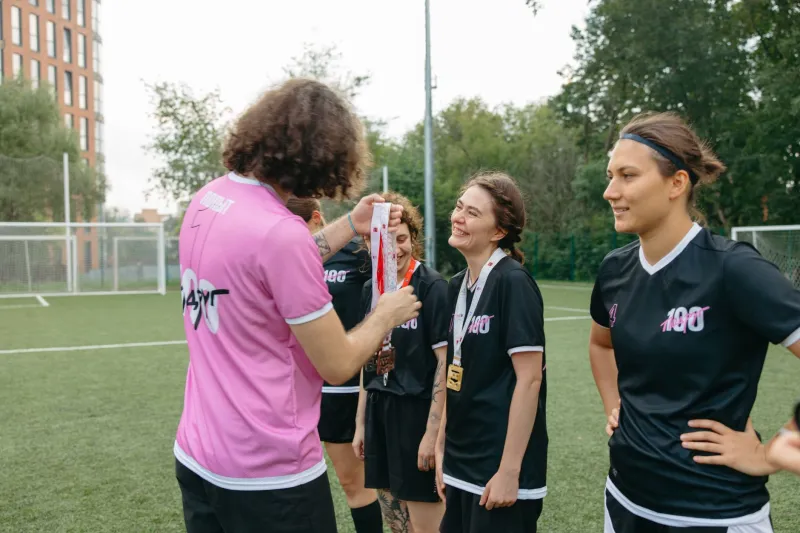
Ask any athlete who has won one. A club championship medal has a peculiar weight. It is not a national medal, but it is proof that you turned up, competed and beat the people you train with every Tuesday. For a young athlete, it can be the first proper title of their life. For a senior, it can be a reminder that the club is not just a place where you borrow hurdles.
That prestige is fragile. It depends on the event feeling like it matters. If nobody publicises the results, if the presentation happens in a corridor while the hall is being locked, if the trophy is handed over without a photograph, the message is clear: this is an afterthought.
Clubs that get it right treat the club champs as a celebration of the whole membership, not just the fast lane. They include a novice race. They run a club relay. They ask older athletes to officiate or mentor. They put the age-group trophies on a table at the front. They make a fuss.
A better template
There is no single formula, but the best club championships tend to share a few habits. They lock the date early and defend it. They keep the timetable tight but humane. They offer events for every age group and ability level, including a mixed relay or a fun field event for those who do not want a flat race. They publish entry lists and results live. They arrange food, tea and enough chairs.
They also use the club champs as a target. Coaches can build a mini-block around it. Athletes can chase a club PB. Team managers can use it as a low-pressure selection opportunity. And the committee can use it to thank volunteers who have stood in the rain all season.
Most importantly, they stop apologising for it. A club championship is not a poor relation to the league. It is the one meet where the whole club is in the same place, doing the same thing, with titles on the line. It deserves a date, a plan and a bit of noise.
The club championship nobody trains for is still a championship. But imagine what it could be if we did.